Immersive Storytelling
at The New York Times
Groundbreaking approaches to visual storytelling through scalable augmented reality and 3D web frameworks.
Role
Director of Immersive Storytelling
Team Size
50+ (Cross-functional)
Timeline
Concept to Launch in 6 Months
As Director of Immersive Storytelling, I founded and led a specialized, multidisciplinary practice to build The New York Times' Augmented Reality (AR) program from the ground up.
Operating in entirely uncharted territory, I directed a highly matrixed team of over 50 product designers, engineers, visual designers, journalists, and marketers to launch a net-new digital ecosystem in just six months. We didn't just ship standalone features; we defined the overarching UX architecture and a completely new interaction grammar for news, delivering dozens of highly accessible 3D and AR experiences to a massive global audience.
Hello, World.
Meet the "Honor Box."
We launched the feature with an article that explains to users why we were building an AR capability. This was also our first AR-enabled article.
It had a very simple "example" where users could project what is called an "honor box" or vintage NYT vending machine into their space: a bit of a wink showcasing our newest technology by presenting our oldest technology: print.
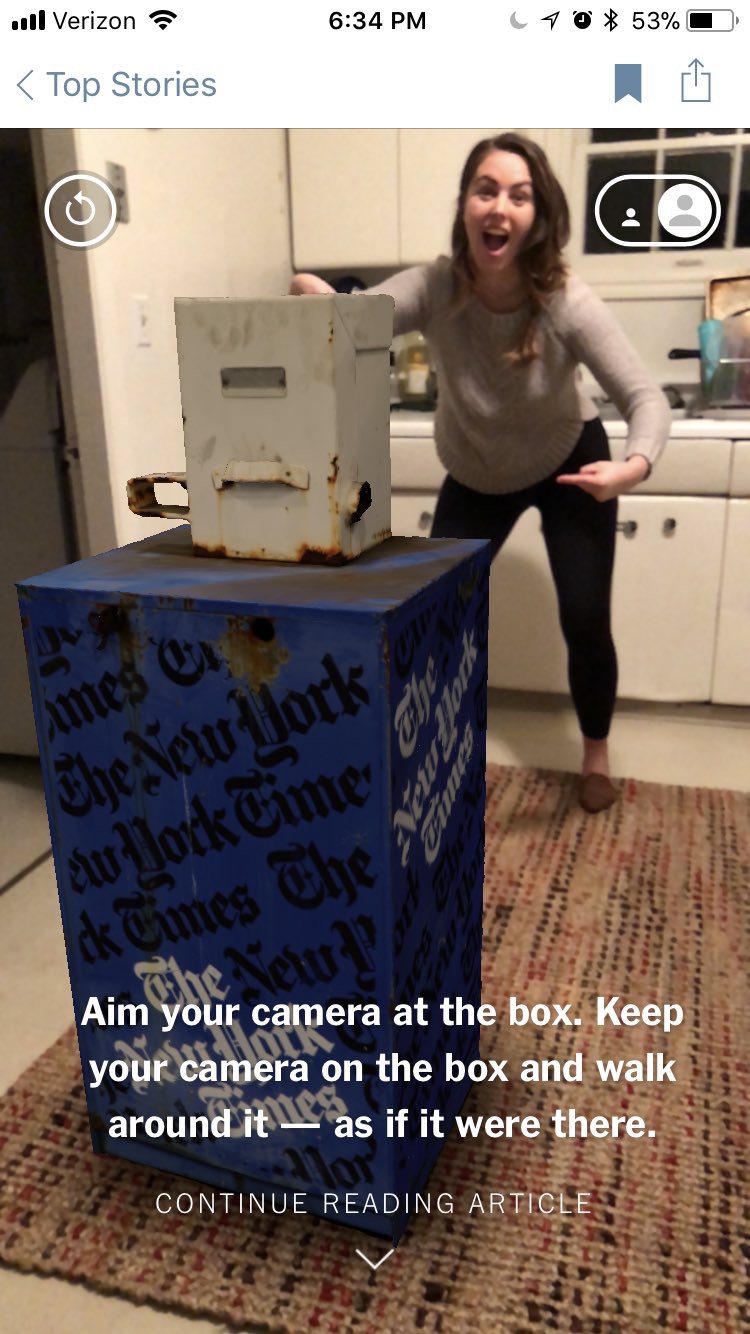
This initial launch was very successful, and we saw the honor box appear in living rooms and kitchens across the world, driving many new positive camera permissions in the new app, and generating a lot of organic sharing on social and in the media.
Major Features
Following the launch, we produced a series of high-fidelity immersive journalism pieces. These projects set the standard for mobile AR, combining volumetric capture, photogrammetry, and spatial data analysis.
Four of the Best Olympians
Analyzing the athletic prowess of Olympic champions using spatial analysis and volumetric video.
David Bowie in 3 Dimensions
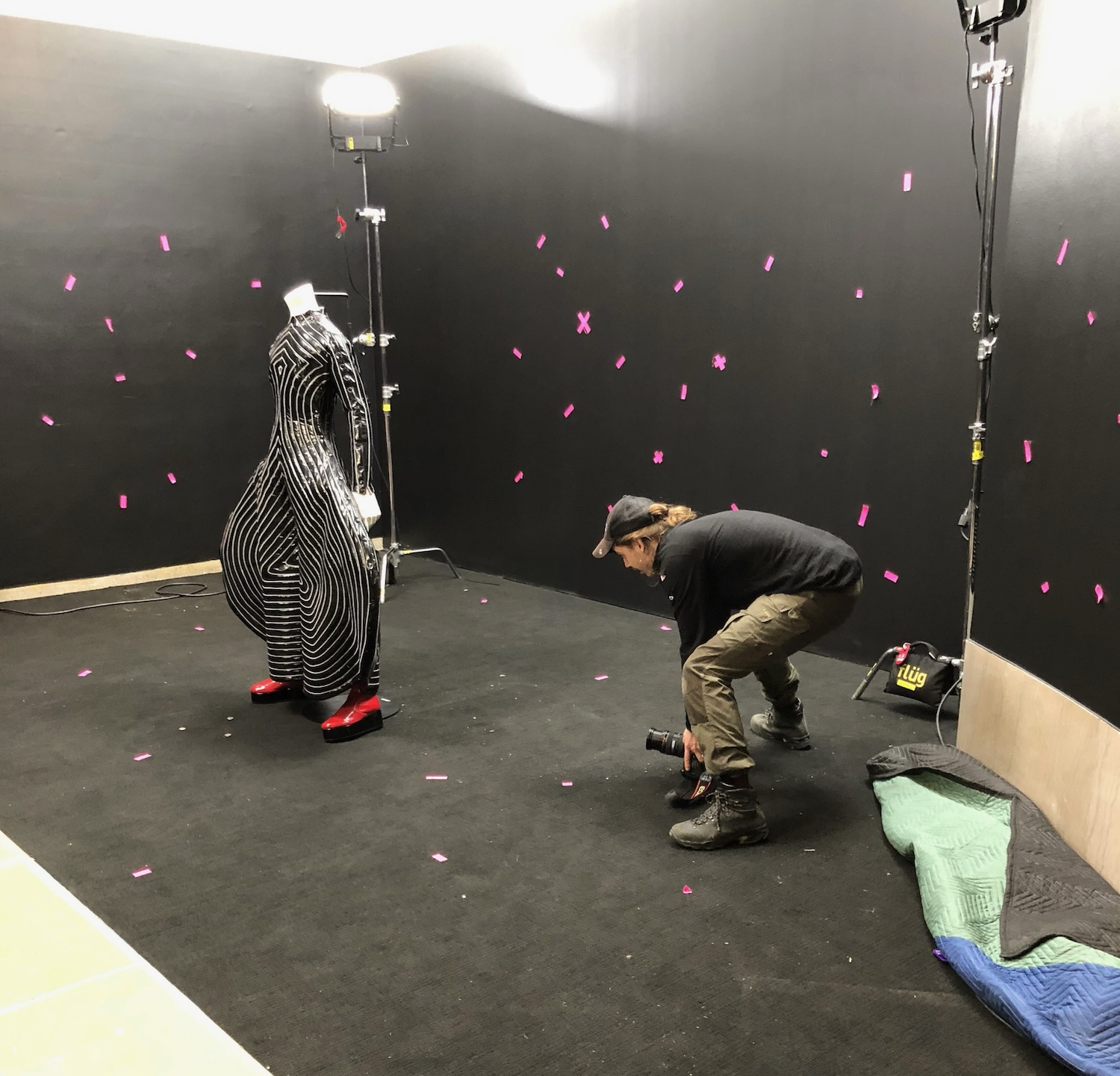
Exploring the costumes and artifacts of the legendary artist in your own space, in collaboration with the Bowie Archive.
One Building, One Bomb
Reconstructing a chemical weapons attack in Syria to prove culpability, winning a News & Documentary Emmy.
Spatial Computing / Magic Leap
Designing the Spatial Article
Reimagining a New York Times article as a fully spatial experience — built side-by-side with Magic Leap and launched as the very first news story on the headset.
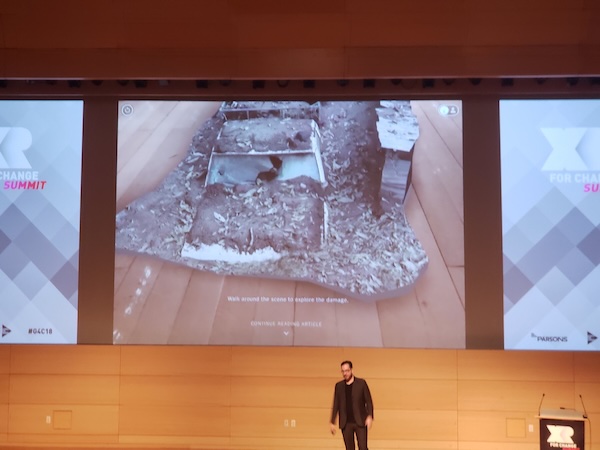
To explore the future of immersive reading, we brought a specialized team down to Magic Leap's headquarters in Florida. Working side-by-side with their engineering and design teams, we investigated what a New York Times article might look like as a fully spatial experience.
We chose to prototype a breaking news event: the devastating 2018 volcanic eruption in Guatemala. We trained a stringer photographer on the ground to capture 700 precise photos of a truck buried in ash, which we then processed into a 1:1 scale 3D model using photogrammetry.
Launching as the very first news story available on the Magic Leap One headset, the design successfully mixed the traditional reading experience with 3D exploration, utilizing the physical space around the reader to convey the immense scale of the disaster.
A glimpse into the future of journalism, using the physical space around you as a canvas.
The Verge
The New York Times is defining what spatial storytelling looks like on Magic Leap.
Fast Company
Mixing breaking news with spatial computing to convey the immense scale of a disaster.
TechCrunch
More AR Projects
A collection of mobile-first experiments
"The Times displayed innovation in AR reporting under Roberts' leadership."
Advancing the Medium
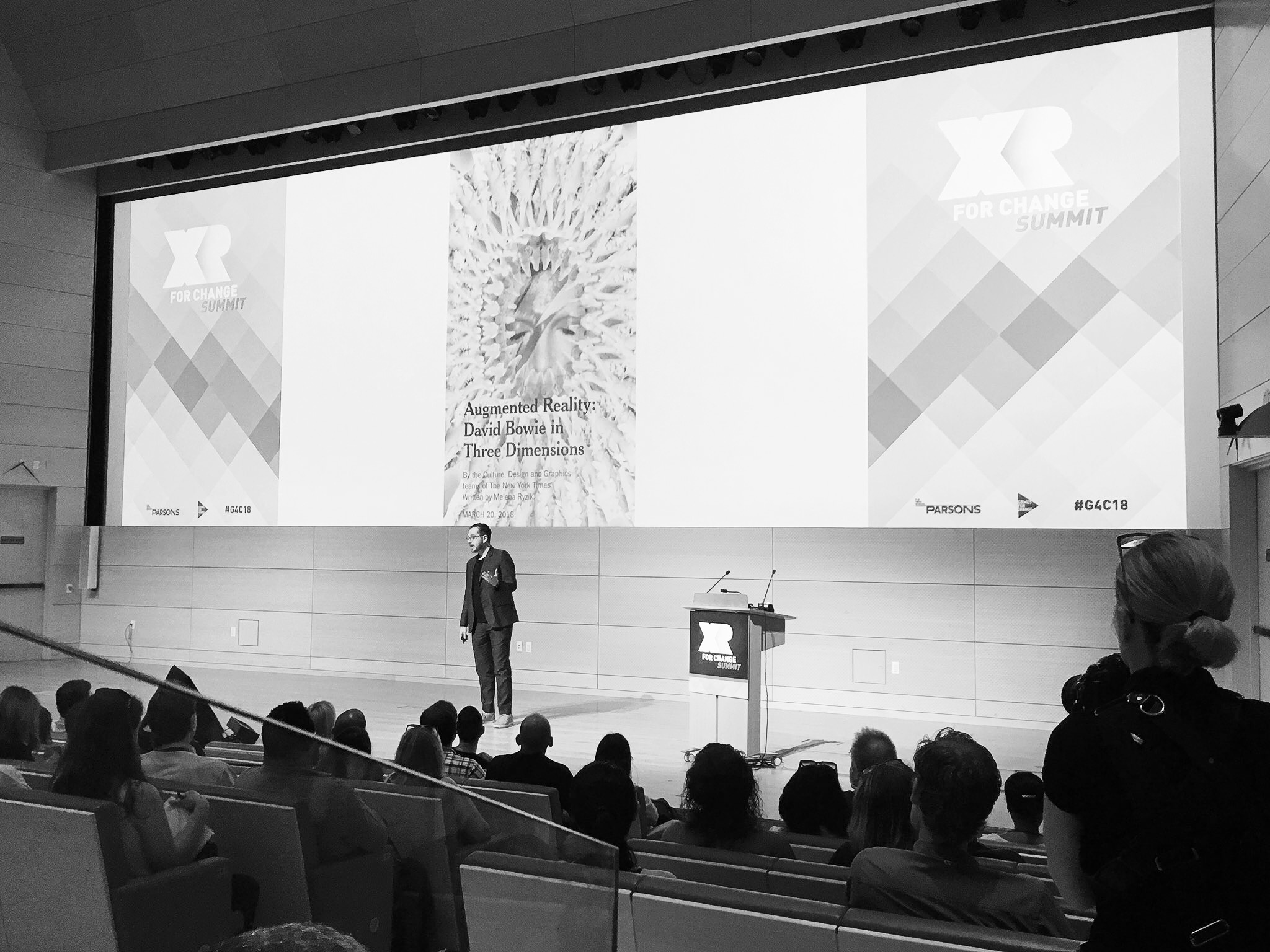
I have had the privilege of sharing our learnings and strategies for immersive journalism at conferences around the world.
From defining the "grammar" of AR news to building cross-functional teams that can deliver 3D on deadline, the work we did at the Times helped set the stage for the spatial web.